#Ten Sectors Where El Niño Risk Is Worth Mapping
El Niño is not a distant weather story. The World Meteorological Organization puts the probability of an event between June and August 2026 at 80%, with National Oceanic and Atmospheric Administration (NOAA) estimating a 96% chance it persists into early 2027. For investors, that is enough notice to think clearly about where exposure concentrates.
The pattern is well understood. Warmer sea-surface temperatures in the central and eastern Pacific shift rainfall and temperature across continents. Southeast Asia dries out. Parts of East Africa and South America flood. Hydropower weakens. Harvests disappoint. Commodity markets reprice. And because global supply chains are tightly integrated, shocks that start regional tend not to stay that way.
Here are ten areas where the investment picture is worth examining now.
#Agricultural Commodity Stocks Face Direct Supply Risk
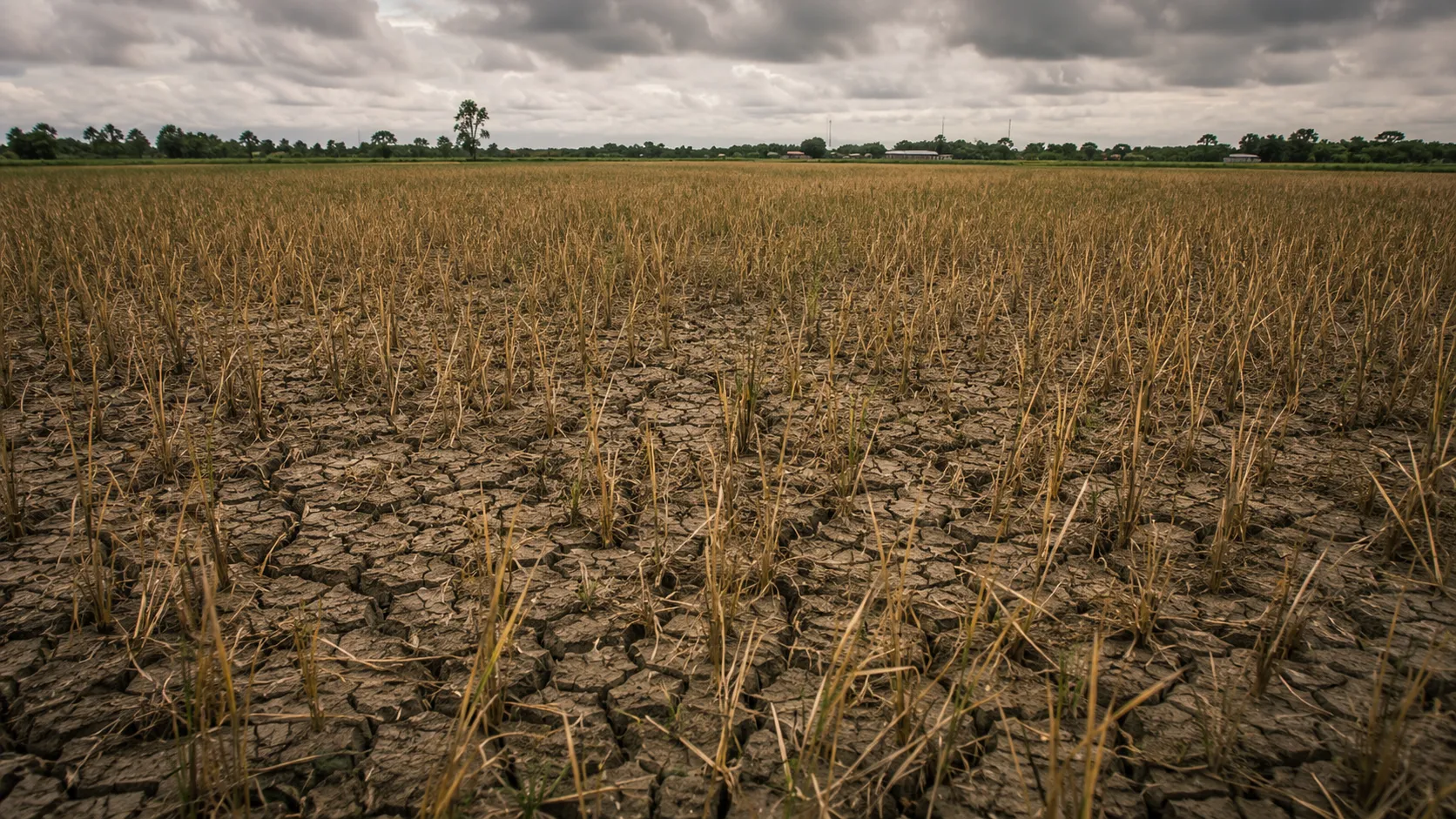
Drought across Southeast Asia hits palm oil and rice production directly. Malaysia and Indonesia together account for the majority of global palm oil supply. Australia's grain belt sits in the path of drier-than-average conditions. Investors tracking listed agri-producers in these regions should be aware that commodity futures often move ahead of equity repricing, which makes futures a useful signal for when pressure is building1.
Rice is an important bellwether. It is both a traded commodity and a daily necessity for billions of people. Asian farmers have already reduced planting in 2026 amid elevated fertilizer and energy costs tied to the Iran War. El Niño compounds that supply constraint.
#Water Infrastructure Investment Accelerates in Drought Years
El Niño intensifies drought cycles, which increases the capital case for water treatment, desalination, and irrigation technology. Listed utilities and industrial water treatment firms have historically attracted defensive flows during periods of water stress, partly because their revenue base is regulated and partly because the spending need becomes visible to policymakers in a way that creates clearer forward visibility for capex. This is a theme with a longer runway than a single climate event.
#Fertilizer Producers Benefit From Squeezed Farm Economics
The combination of elevated input costs and threatened yields creates a specific dynamic for fertilizer producers. Potash and nitrogen producers are direct plays on farm input economics. When yields are at risk, the pressure to maximize returns per hectare increases, which tends to support demand for crop nutrition products even as farmers are otherwise cutting costs. Large-cap names like Nutrien (NYSE: NTR) and Mosaic (NYSE: MOS) are the obvious reference points here. The nuance is that affordability constraints in lower-income agricultural markets may limit volume, which is worth watching in earnings commentary.
#Reinsurers Face Correlated Loss Events Across Multiple Perils
Crop insurance and agricultural reinsurance is a less obvious angle, but a real one. Reinsurers carry heavy exposure to correlated climate events precisely because El Niño creates simultaneous pressure across flood, drought, and wildfire perils in different geographies. The question for investors is not just which balance sheets carry the most exposure, but which firms are positioned to benefit from premium repricing in subsequent years. Everest Group Ltd (NYSE: EG), Renaissancere Holdings Ltd (NYSE: RNR) and Markel Group Inc (NYSE: MKL) are the reference names here, while Munich Re (OTC: MURGY) and Swiss Re (OTC: SSREY) are OTC-listed International names. Premium cycles often lag loss events by 12 to 18 months, which is relevant for timing.
#Drought Disrupts Inland Shipping Corridors
Lower river levels reduce barge capacity on major inland freight corridors. The Rhine, Mississippi, Paraná, and Mekong are all relevant depending on which parts of the world El Niño affects most severely. Grain handling, coal movement, and iron ore transport all depend on river systems. Dry bulk shipping stocks and port operators carry indirect exposure here, though the impact tends to be episodic rather than structural.
#Hydropower Dependency Creates Electricity Price Volatility
El Niño reduces rainfall across key hydropower-dependent regions, including South America and Southeast Asia. Brazil generates around 60% of its electricity from hydro. When reservoirs fall, grid operators turn to backup gas and coal generation, which raises power prices and increases fossil fuel demand. This creates price volatility in electricity markets with high hydro exposure. For investors, this is both a risk for industrial energy consumers in those regions and a potential tailwind for backup generation assets.
#Fisheries and Aquaculture Stocks Carry Ocean Temperature Exposure
Warmer ocean temperatures disrupt fisheries across Pacific-facing regions. Aquaculture and wild-catch producers in salmon, shrimp, and tuna are directly affected. Companies with operations concentrated in climate-sensitive ocean zones carry more risk than those with geographically diversified production. This is a sector where the operating economics are already tight, and a sustained El Niño event adds pressure to feed costs, stocking density, and mortality rates.
#Wildfire Risk Hits Timber and Property Insurers
Drier conditions raise wildfire risk in Australia, California, and Southeast Asia. Timber and forestry REITs carry asset exposure in affected regions. Property insurers with high concentration in wildfire zones face claims pressure, and the California market in particular has been through significant repricing in recent years. The risk is not new, but El Niño amplifies baseline fire weather conditions, which matters for frequency and severity modeling.
#Data Centers and AI Infrastructure Face Grid Stress
This is an angle that retail investors are not pricing well. Climate shocks can disrupt power grids, water systems, and the logistics corridors that semiconductor manufacturing and data center operations depend on. With AI energy demand already straining grid capacity in multiple markets, El Niño adds a layer of supply-side pressure that is hard to hedge at the asset level. Investors in data center REITs and hyperscaler infrastructure should be asking questions about grid resilience, water cooling dependency, and backup power capacity in climate-exposed locations.
#Emerging Market Sovereign Risk Rises With Food Insecurity
Governments in food-vulnerable regions respond to price shocks with export controls, subsidies, and emergency imports. These measures are often necessary, but they distort markets and can shift scarcity elsewhere. UN agencies have already flagged elevated food insecurity risk in Latin America and the Caribbean, including Central America's Dry Corridor. For investors with EM exposure, this creates FX and sovereign debt risk alongside pricing pressure in staple food stocks. Countries that entered 2026 with thin fiscal buffers are most exposed to having to choose between food stability and debt sustainability.
#The Counterargument: Forecasts Are Not Certainties
El Niño forecasting has improved considerably, but the peak strength and regional distribution of impacts remain uncertain. A moderate event would look quite different from a strong one. Some of the investment risks outlined here are correlated so a weaker-than-expected El Niño would reduce pressure across multiple sectors simultaneously. Investors should treat this as a risk-mapping exercise, not a directional trade. The value is in understanding where exposure sits and how it might compound with other risks already in portfolios.
El Niño is a foreseeable systemic shock arriving into a market environment already dealing with elevated conflict risk, input cost inflation, and fragile supply chains. The sectors above will not all move at once, and some will take 12 to 18 months to fully reflect the climate impact in reported numbers. But the forecast window is long enough to think clearly about where concentration risk sits.