#Can Tight Gas Fill Europe's LNG Supply Gap?
Europe's gas storage deficit is a production problem. Russian supply is exiting by legislative deadline, Norwegian output is near its ceiling, and the basins that could add domestic molecules have sat largely untouched by modern completion techniques for three decades. ExxonMobil (NYSE: XOM) brings the capital scale and proprietary completion model, Halliburton (NYSE: HAL) is exporting the fracturing technology internationally, and Expand Energy (NASDAQ: EXE), the largest US gas producer, shows what the approach delivers at maturity. In the Pannonian Basin, CanCambria Energy Corp. (TSXV: CCEC) (OTCQB: CCEYF) (FSE: 4JH) is working to apply that same playbook to a large underdeveloped tight-gas position.
The North American unconventional revolution ran on a repeatable formula. Identify tight formations with sufficient gas in place, apply hydraulic fracturing and multi-well pad drilling, and drive down per-unit costs through scale. Data from AGSI+ (the EU gas storage transparency platform run by Gas Infrastructure Europe) shows EU storage near 48% at the start of July1, below the five-year seasonal average of 61%2. That’s a deficit deep enough that the EU has relaxed its mandatory winter fill target from 90% to 80%3. Terminals can close that gap by importing gas at global prices in competition with Asian buyers, but to ensure security of supply, European governments increasingly want their molecules to come from the ground. ExxonMobil's Permian scale, Halliburton's international completions push, and Expand Energy's producing asset base collectively frame what disciplined execution looks like.
CanCambria Energy Corp. (TSXV: CCEC) (OTCQB: CCEYF) (FSE: 4JH) holds a 100% working interest in the Kiskunhalas project in southern Hungary, covering 1,080 km² of the Pannonian Basin4. The asset carries an independently evaluated 2C contingent resource (best-estimate recoverable volumes prior to production confirmation) of 572 Bcf of gas plus 59 million barrels of condensate, assessed by independent consultancy Chapman Hydrogen and Petroleum Engineering. The project's type curve (the projected production profile of a typical well) is modeled on the Pinedale tight-gas field in Wyoming, where CEO Paul Clarke was formerly technical lead at Ultra Petroleum. Reported project breakeven sits near US$4/MMBtu, while European TTF prices (the Dutch Title Transfer Facility, Europe's primary gas benchmark) recently traded above US$145. Unlike much of Western Europe, Hungary maintains a supportive regulatory framework for hydraulic stimulation, and the project's Technical Operating Plan was approved in March 2026. In June, prospective joint venture partners completed technical due diligence, with commercial negotiations now underway in the Raiffeisen Bank International-led farmout process. The project remains pre-revenue. No JV terms are finalized, and well performance under modern completions in this basin is unproven.
ExxonMobil (NYSE: XOM) became the world's most consequential unconventional operator through its acquisition of Pioneer Natural Resources, adding more than 850,000 net Permian acres and Pioneer's multi-well pad drilling and completion workflows to its own6. In Q1 2026, Permian production reached 1.7 million oil-equivalent barrels per day, up 250,000 year-on-year, with management guiding to 1.8 million for full-year 20267. Exxon’s proprietary completion technologies applied to Pioneer acreage include a lightweight petcoke-based proppant (a granular material pumped into fractures to hold them open) that ExxonMobil reported in December 2025 was delivering recovery improvements of about 20%8. On the January 2026 earnings call, management said the proppant went into roughly 25% of 2025 wells, with deployment expected to reach 50% of new wells by the end of 20269. CanCambria's Clarke previously worked on Pioneer's Eagle Ford and Permian programs, giving him direct operating experience with the class of completion methods being industrialized. Exxon’s integrated scale, dividend, and investment-grade balance sheet make it the benchmark for what the technical model achieves when fully industrialized.
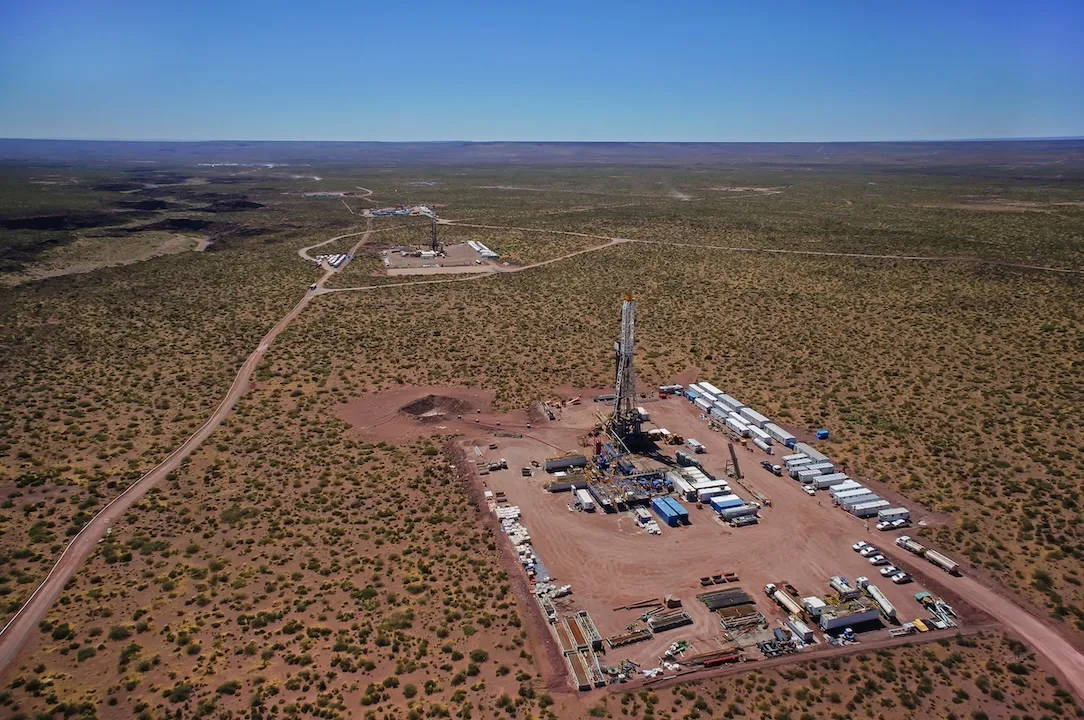
Halliburton (NYSE: HAL) physically executes hydraulic fracturing programs and is now exporting that capability. In April 2026, Argentina's YPF awarded Halliburton a multibillion-dollar integrated completions contract, the first international deployment of its Zeus electric fracturing platform outside North America10. CEO Jeff Miller told analysts in April that geopolitical disruptions had eliminated the global supply overhang, creating a more constructive backdrop for upstream investment11. Hydraulic fracturing (pumping high-pressure fluid into tight rock to create flow pathways for trapped gas) is the completion technique CanCambria's Kiskunhalas program aims to deploy. Halliburton provides oilfield services in Europe helping make tight-gas programs deliverable internationally.
Expand Energy (NASDAQ: EXE), North America's largest natural gas producer by volume following the Chesapeake-SWN merger, operates Marcellus, Utica, and Haynesville tight-gas formations using the same multi-well pad drilling and hydraulic fracturing template CanCambria intends to deploy at Kiskunhalas. In Q1 2026, EXE reported free cash flow of US$1.7 billion and reaffirmed full-year production guidance of approximately 7.5 Bcfe per day12. That cash was generated at Henry Hub-linked prices (the primary US natural gas benchmark)13, where Appalachian gas frequently trades at a discount on pipeline constraints. CanCambria targets European pricing, where TTF has recently traded at multiples of US benchmarks. The technical model is the same. The pricing environment is not.
The tight-gas methods industrialized by operators like Expand Energy and enabled by completion technology from Halliburton unlocked a generation of US gas supply, and ExxonMobil's Permian operation shows where that model goes with sufficient capital. The question CanCambria is positioned to test is whether the same approach can deliver inside a European basin where the pricing case is strong, the geology is established, and modern completions have never been applied at development scale.