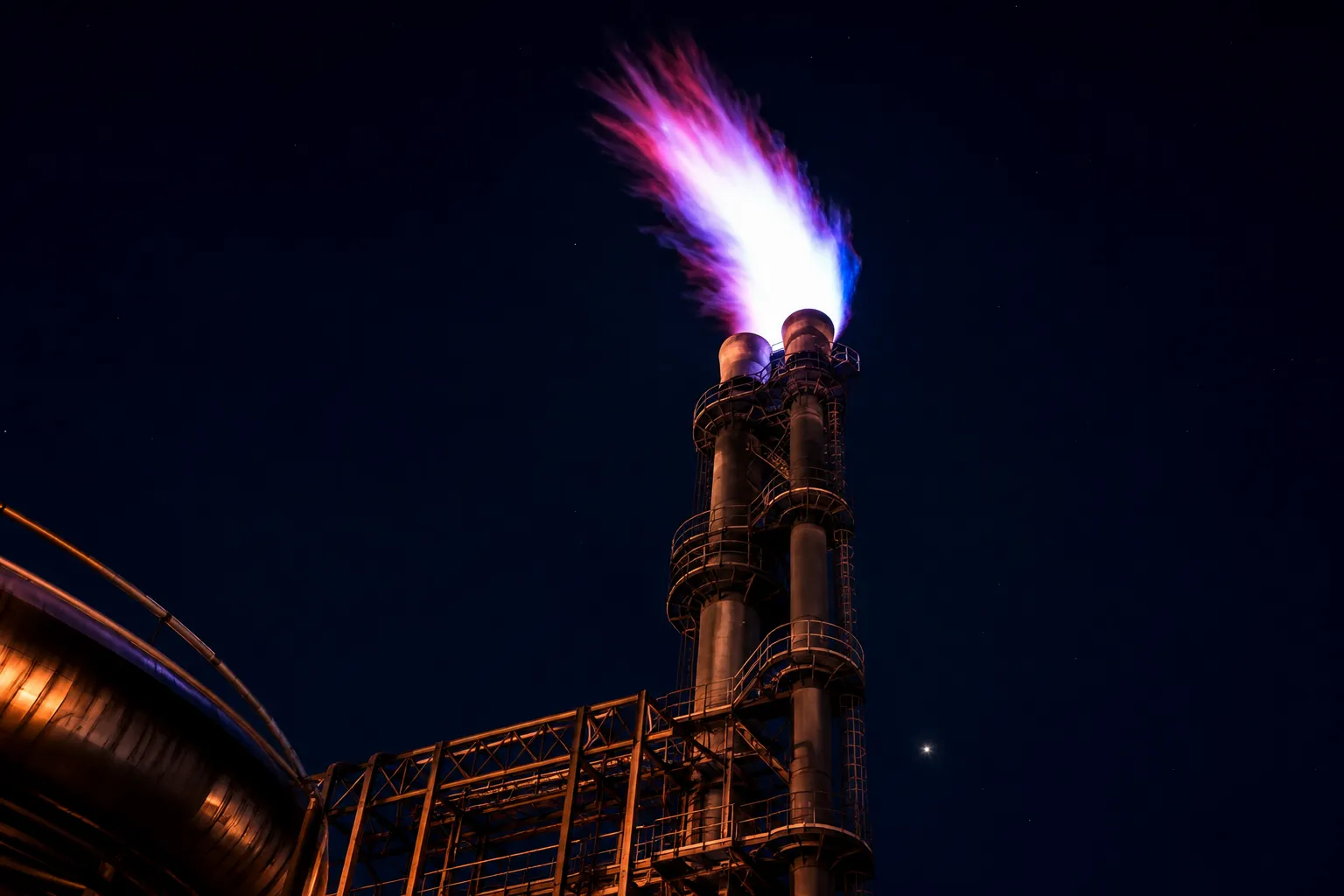
The race to replace Russian gas is reshaping energy markets from Central Europe to the Gulf Coast, forcing governments, producers, and infrastructure operators to rethink where supply comes from and who controls it. Vermilion Energy (NYSE: VET) already produces the European gas that now commands a premium, Golar LNG (NASDAQ: GLNG) ships the seaborne alternative, and OMV (OTC: OMVKY) anchors Central Europe's supply security, while CanCambria Energy Corp. (TSXV: CCEC) (OTCQB: CCEYF) (FSE: 4JH) is advancing a natural gas development in Hungary that positions it as part of the solution.
#Why Domestic Gas Matters Now
The shale revolution taught North American investors a lesson Europe never applied. Nations that develop domestic gas supply gain price stability, political leverage, and structural insulation from global supply shocks. Countries without it pay whatever the market demands. The European Union has reached a historic decision to phase out Russian natural gas imports by November 20271, removing a supply source that covered roughly 40% of European gas demand as recently as 20212. European TTF prices (the Dutch Title Transfer Facility, the continent's primary gas benchmark) traded above US$14/MMBtu3 in early July 2026, more than four times the US Henry Hub benchmark4, a spread that reflects not just supply imbalance but the risk premium of a hard legislative deadline. Vermilion benefits from Europe's need for local gas production, Golar enables new LNG import capacity, and OMV is investing to secure domestic supply. Together, they point to a European gas market placing greater value on supply security.
CanCambria Energy Corp. (TSXV: CCEC) (OTCQB: CCEYF) (FSE: 4JH) is a pre-revenue exploration and production company advancing its 100%-owned Kiskunhalas tight gas project in southern Hungary5. The project is supported by an independently evaluated 2C contingent resource (the best estimate of recoverable volumes prior to production) of 572 billion cubic feet in a market where Hungary imported 74% of its natural gas from Russia in 2024, making new domestic production a strategic priority6. Hungary's supportive regulatory framework for hydraulic stimulation and a reported project breakeven of approximately US$4 per MMBtu underpin the economics, with TTF futures priced at more than double that level through 20283. In June 2026, the company announced that technical due diligence had been completed by prospective joint venture partners, with commercial negotiations now underway as part of the Raiffeisen Bank International-led farmout process7. Management has described the prospective farmout (bringing in a funded partner in exchange for a project interest) as the critical step toward funding the initial drilling program and demonstrating the project's commercial potential. As a pre-revenue company, CanCambria remains dependent on securing a joint venture partner and successfully executing its initial drilling program before commercial production can be established.
Vermilion Energy (NYSE: VET) is a global gas producer that operates onshore natural gas assets in Germany and the Netherlands, with production priced directly against TTF. In its Q1 2026 results8, the company reported European gas production realizing approximately US$16/MMBtu, and announced an acquisition of producing assets in Germany alongside the award of three new North German Basin concessions that doubled Vermilion's German acreage to over one million net acres. The company is progressing new well development at its Wisselshorst license and plans further Netherlands drilling in the second half of 2026. Vermilion's operations indicate that onshore European gas development is commercially viable at current prices, and that operators with the right asset base are actively expanding rather than retreating.
Golar LNG (NASDAQ: GLNG) is a floating LNG infrastructure company whose business model exists because energy-insecure nations will pay a sustained premium to access gas they cannot produce at home. Its FLNG units (floating liquefaction vessels that convert offshore gas directly into exportable LNG) serve markets where domestic production is absent or insufficient, providing supply that pipeline gas cannot. In Q1 2026, Golar reported adjusted EBITDA of US$106 million, up from US$41 million a year earlier, with management noting that commercial momentum had accelerated following recent Middle East supply disruptions9. During the quarter, Securing Energy for Europe (SEFE) signed an eight-year LNG supply agreement with a Golar affiliate, commencing 2027. That deal tells you everything about the state of European gas supply. A major European energy buyer is committing to eight years of imported LNG because it cannot yet rely on domestic alternatives.
OMV (OTC: OMVKY) is an Austrian integrated energy company with operations across Central and Eastern Europe and revenues of approximately EUR 24.3 billion in 202510. In May 2026, the company brought online Austria's largest domestic natural gas discovery in 40 years, the Wittau field in Lower Austria, with the first phase targeting 11 terawatt-hours of production for delivery ahead of winter 2026/2711. OMV framed the project explicitly as a domestic supply security measure, following its December 2024 termination of its long-running gas supply contract with Gazprom Export12. The Wittau development and the Gazprom exit together illustrate the institutional logic driving Central European energy policy. Import dependency carries risk that domestic production reduces, and large incumbents are paying to reduce it. For smaller operators with local gas resources that remain largely untapped, that policy direction functions as a structural tailwind.
The shift away from imported gas is a global repricing of supply risk, one North American investors understand from the shale side and that European markets are experiencing from the demand side. Vermilion shows the European onshore model works, Golar shows what import dependency costs, and OMV shows that institutional capital is already moving toward domestic supply. CanCambria is positioned where all three converge.